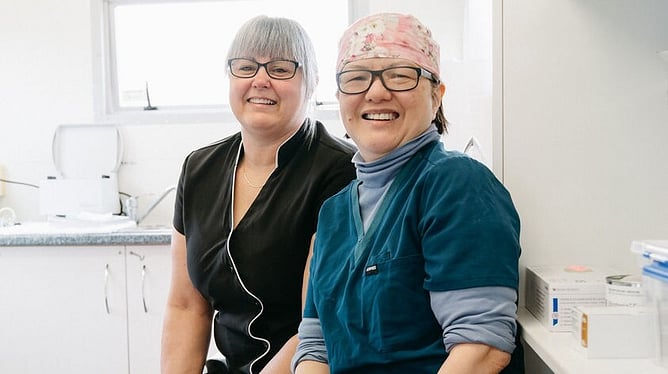
Good oral health is the backbone of disease prevention and general health and wellbeing, and having a smile at the ready is something many of us take for granted.
But for women who have experienced family violence, oral healthcare often takes a backseat, especially for those with historical or urgent dental issues and very limited financial means to access treatment.
A funding partnership based on aroha and respect for women’s health
In 2025, Braemar Charitable Trust, which works to advance health equity and access and boost community health outcomes, received multi-year funding from the Clare Foundation to allow the delivery of free complex dental treatment and dentures for six women’s refuges across the Waikato region. Oral surgery is then provided for free through the Trust’s Community Surgery Programme.
Established in 2020, Clare funds groups who can make positive change happen for women, oral health, youth wellbeing and the environment.
Paula Baker, Braemar Charitable Trust Manager, says since the funding was introduced many women have received much-needed dental treatment, including complex fillings, extractions and dentures, helping these women gain a solid oral health baseline.
“Thanks to Clare’s generous support and vision, this programme is having an extremely positive impact and achieving what it set out to do: help women in the care of women’s refuges in the Waikato region with their oral health needs so they can re-enter their communities with dignity and confidence.”
She says that other, more complex procedures for women and children have been referred to and treated through the Trust’s Community Surgery Programme, which enables free surgery and health interventions for those who have been declined by the public health system, and don’t have ACC cover, medical insurance, or the financial means to pay privately.
Good oral health for a fresh start
And the impact of this treatment often bears no words.
“The women we have been able to help have often lived in family harm situations for most of their lives and have not been able to prioritise their own needs for a very long time. These are situations where family harm has impacted every aspect of their life, on top of which they may be caring for children, looking for a new home of their own or looking for work,” says Paula.
“Being able to eat normally, experience food they may not have had in a long time, and smiling freely without feeling embarrassed, are extremely meaningful outcomes that go a long way in helping these women re-enter their communities with confidence.”
The stories that mean more than the numbers
Paula says maintaining close relationships with women’s refuges and other community stakeholders is essential to the longevity of the programme.
“We are mindful that sometimes sharing statistics from programmes like this, such as total numbers of those helped or the numbers of procedures performed, don’t measure the true impact of this opportunity. This is why we invest heavily in our relationships to get an authentic sense of the programme’s progress, and most importantly, how it is benefiting the women at the heart of it.”
Anne-Marie Maikuku, Strategic Funding Lead at Clare, says the foundation’s partnership with Braemar Charitable Trust is a heartening one where true value is placed on the restored confidence and dignity of the women the oral healthcare pathway is helping.
“While it is positive to see the numbers of those being helped, the true impact of programmes such as this one is found in the stories of the women, children and whānau whose lives are changed. It is often those restored moments of confidence, dignity and hope that are the most meaningful outcomes, even if they are the hardest to quantify.
“It is wonderful to hear that the Women’s Refuge oral health pathway is achieving exactly what it set out to do.”